Kashmir’s Tourism Rollercoaster: A Record Boom, a Devastating Crash, and a Recovery That Still Isn’t Reaching Locals
By: Javid Amin | 12 Aug 2026
In 2024, Kashmir logged more tourists than ever before. In 2025, that number collapsed by nearly a quarter after the Pahalgam attack. In 2026, arrivals are slowly climbing back — but ask a houseboat owner or a local travel agent, and the boom-bust-rebound cycle looks less like a rollercoaster and more like proof of exactly who the system was never built to protect.
Srinagar — Two years, two headlines. In March 2025, Jammu and Kashmir’s government stood in the Assembly and announced a record: 2.36 crore tourists had visited the Union Territory in 2024, the highest figure on record, credited to a security “normalcy” narrative that officials had spent years building. Fourteen months later, hotel occupancy in Pahalgam — one of the Valley’s marquee destinations — was still stuck below 50 percent, and local operators were describing a tourism economy that hadn’t recovered even a year after it fell apart.
What happened in between explains not just Kashmir’s most turbulent tourism cycle in a decade, but also why the debate over who actually profits from the Valley’s visitors has become sharper, not softer, since the crash.
The Boom, the Attack, and the Crash — In Numbers
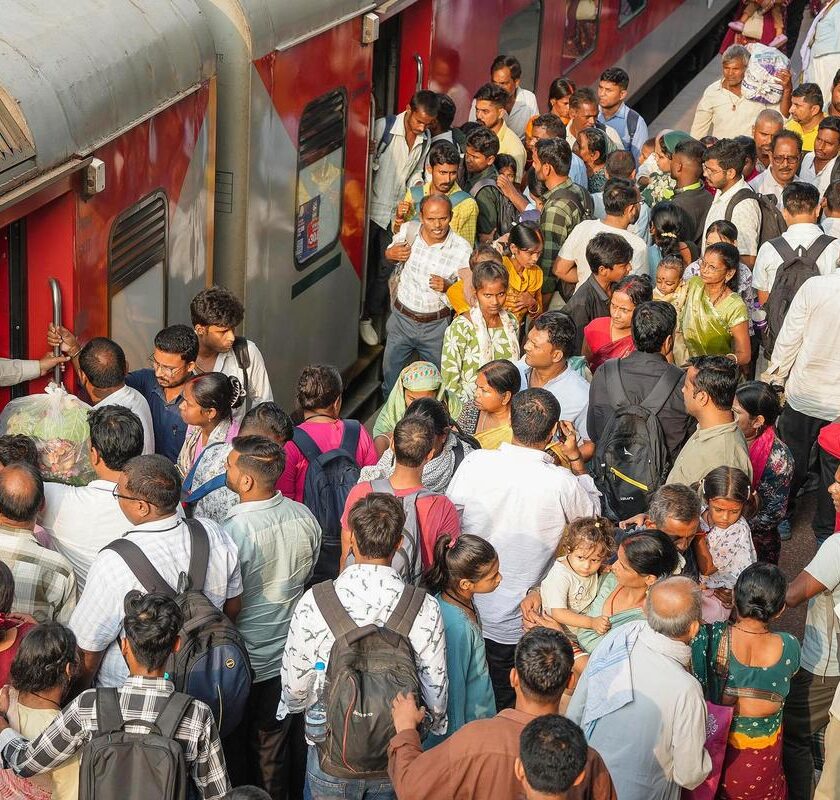
The 2024 record was real: 2.36 crore total visits, per official figures, with a decade-long climb from just 1.13 crore domestic visits in 2021. Then, on April 22, 2025, gunmen attacked tourists at Baisaran Meadows near Pahalgam, killing 26 civilians in the deadliest assault on civilians in the region since 2000. The fallout was immediate — Chief Minister Omar Abdullah himself described an “exodus of our guests” within 24 hours, as hoteliers reported mass cancellations and buses and taxis filled with tourists scrambling to leave.
The numbers that followed, tabled in Parliament in mid-2026, tell the story starkly: domestic tourist visits to Jammu and Kashmir fell from 2.30 crore in 2024 to 1.77 crore in 2025 — a drop of nearly 23 percent — while foreign arrivals collapsed by almost 45 percent, from 65,452 to just 36,410. In the Kashmir division specifically, arrivals to marquee spots cratered from roughly 98 lakh in 2024 to under half that in 2025. One tourism body in Katra, base camp for the Vaishno Devi pilgrimage, called it a season “completely wiped out,” and formally requested a relief package from the government.
By April 2026 — a year after the attack — the scars were still visible in the balance sheets. Hotel occupancy across Kashmir’s major destinations, which used to run at 70–80 percent during peak season, was reported hovering at 40–45 percent, with revenue per available room down nearly 35 percent. Properties were cutting staff and deferring maintenance just to stay open.
There are, finally, real signs of a turnaround. As 2026 began, local tour operators noted a genuine uptick in day-trip visitors, even if overnight stays — the kind that actually spend money in the Valley — haven’t caught up yet. The government has announced that all previously closed tourist sites will reopen by May 2026, alongside plans for nine new destinations to spread the load. Gulmarg’s first snowfall of the 2025–26 winter season was reported as a genuine morale boost for an industry desperate for good news.
Why the Crash Exposed the Leakage Problem, Instead of Hiding It
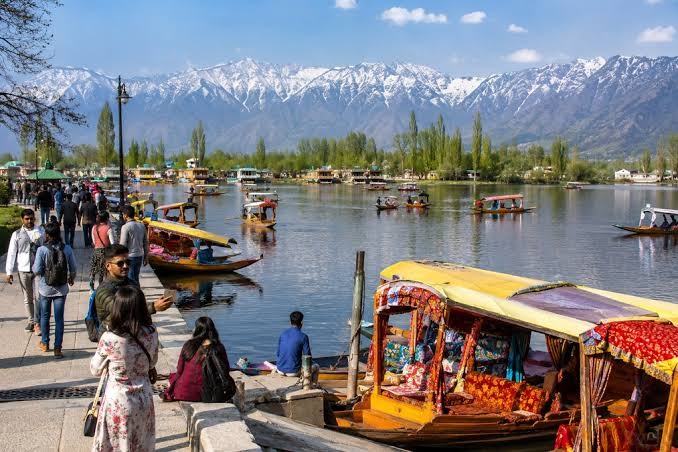
Here’s the part that doesn’t show up in arrival statistics: a downturn doesn’t hit every player in a tourism economy equally — and Kashmir’s crash made that painfully visible. Large hotel chains and outside-capital operators, with reserves and diversified bookings across India, could absorb a bad season. A family running a single Dal Lake houseboat, a shikara operator with no other income, or a local travel agent competing against national booking platforms had no such cushion. The same structural imbalance that was quietly draining money out of the Valley during the 2024 boom became existential during the 2025 bust.
That’s precisely the argument local trade voices have been making even as the recovery gets underway. In an August 2026 analysis, industry watchers in Srinagar laid out how online booking platforms and mismatched hotel pricing continue to squeeze the very people who built Kashmir’s tourism trade over decades — travel agents who mapped its routes and kept tourists safe through genuinely difficult years, now increasingly cut out of bookings that once ran through them. Their core complaint: Kashmir doesn’t have a demand problem when tourists show up — it has a distribution problem, where volume doesn’t reliably translate into local income.
Several specific mechanisms keep surfacing in on-the-ground accounts:
- Rate discrimination against local agents. Some properties quietly offer better rates to outside operators or direct online bookers than to the Kashmiri agents who’ve sent them business for years.
- Outside-leased properties. National operators increasingly lease local hotels and guesthouses outright, then market them through networks based far from the Valley — leaving local businesses competing against their own properties.
- Unregulated hotel construction. A building rush in Gulmarg, Pahalgam, Doodhpathri, and Gurez has been fuelled substantially by outside capital, not local entrepreneurship — meaning new supply doesn’t necessarily mean new local income.
- Seasonal bypassing. Property owners often run their own booking desks during peak months, cutting out travel agents entirely, then return to those same agents only once demand slows — leaving local intermediaries with the least stable income in the chain.
The Jobs Question Nobody Can Fully Answer
Officials describe tourism as one of J&K’s largest employment generators, and the numbers tabled in Parliament back that up in broad strokes: tourism-related employment is estimated to have grown from 10.42 lakh people in 2021–22 to 10.78 lakh by 2025, based on national labour survey data. But the same parliamentary answer contained an important caveat — no formal study has ever been conducted to assess tourism’s direct economic or employment impact in Jammu and Kashmir specifically. The employment figures, in other words, are statistical estimates layered onto national survey data, not the product of a dedicated on-the-ground assessment of who’s actually earning what. For an industry this central to the Valley’s economy, that’s a significant blind spot — one that makes it hard to know, with real confidence, how much of that 10.78 lakh reflects steady local livelihoods versus fragile, seasonal, or indirect work.
What Recovery Should Actually Look Like
Nationally, tourism contributes an estimated 5.22 percent of India’s GDP, based on the country’s last Tourism Satellite Account — itself acknowledged by the Ministry of Tourism as outdated, with a fresh assessment now underway. Kashmir’s share of that national tourism economy is significant, but the events of 2025–26 have forced a sharper question than raw footfall ever did: recovery back to what?
If the answer is simply “back to 2024-style volume,” the same leakage dynamics that hollowed out local margins during the boom will resume unchanged, just with an added layer of fragility exposed by the crash. If the answer is a genuinely different model, the ingredients are already being discussed by industry bodies and researchers alike:
- Push community-based tourism harder — homestays in Gurez, Lolab, and the villages around Doodhpathri that route income directly to households rather than through an intermediary based elsewhere.
- Regulate the pricing gap between what properties quote to local agents versus outside operators and platforms.
- Spread the map, not just the marketing — the government’s plan for nine new destinations only helps if infrastructure and local ownership go with it, not just outside capital chasing the next Gulmarg.
- Design for resilience, not just volume — a tourism economy built on longer stays, local guiding, and diversified income is far better positioned to survive the next shock, whatever form it takes, than one built purely on maximizing arrival counts.
- Commission the impact study that’s never been done — without real data on who earns what, both government policy and public debate about “who benefits” are working from estimates, not evidence.
The Bottom Line
Kashmir’s tourism story since 2024 has been genuinely dramatic — a record year, a devastating attack, a sharp collapse, and now a cautious climb back. But strip away the headline swings, and the underlying question locals have been asking hasn’t changed at all: when the visitors do come, who actually gets paid? Two years of extremes have made that question harder to avoid, not easier — because the businesses with the least cushion during the crash were, overwhelmingly, the same ones that were already capturing the smallest share of the boom. A recovery that doesn’t fix that isn’t really a recovery for the people the “Kashmir experience” depends on — it’s just the same imbalance, back at a higher volume.
This feature draws on data tabled in the Lok Sabha and Rajya Sabha by the Union Ministry of Tourism (2026), statements to the J&K Legislative Assembly, and reporting from Kashmir Observer, Kashmir Life, Deccan Herald, Travel and Tour World, and Nomad Lawyer.